
Returning to a more casual office: The 3-signal system that still reads senior
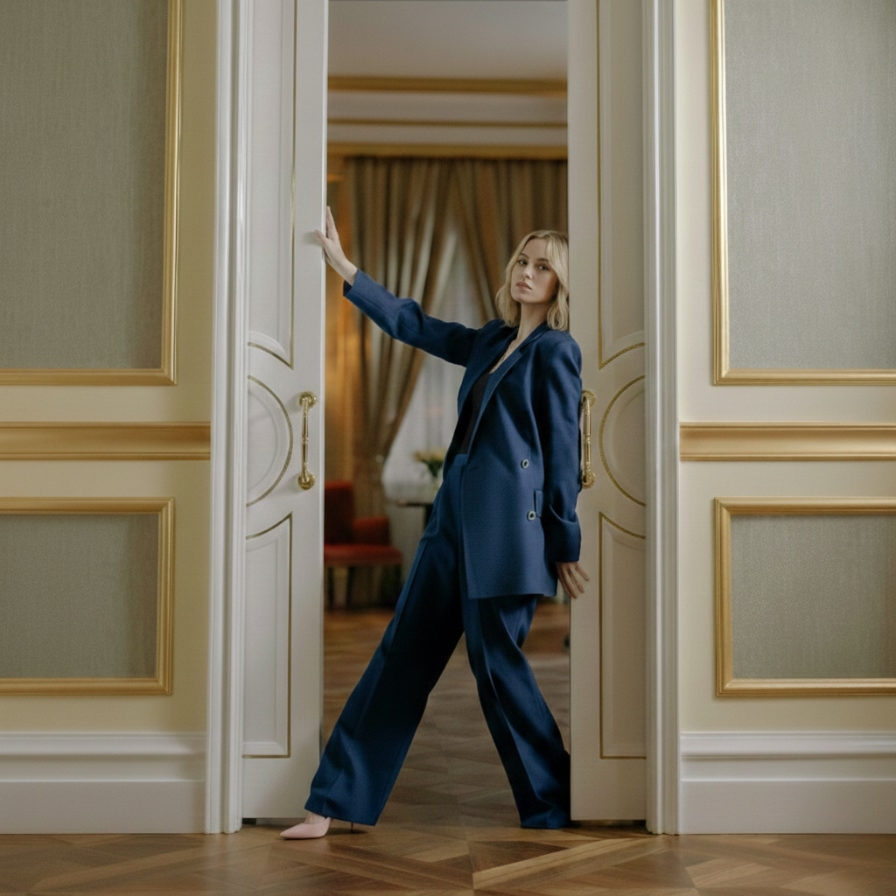
In a casual office, you do not need armour, you need intent
A casual dress code can feel like freedom until you are back in it and suddenly unsure what signals authority. The problem is not denim. The problem is ambiguity.
The wider context is clear: the industry expects continued volatility, and consumers remain value-conscious. McKinsey’s State of Fashion 2026: When the rules change frames 2026 as low growth with persistent macro uncertainty and value-conscious behaviour.
See McKinsey’s State of Fashion 2026 summary and the companion report hub at The Business of Fashion’s State of Fashion coverage.
Vestur’s definition is simple and usable:
Professional in a casual office means control. Controlled fabric, controlled silhouette, controlled finishing.
1) Seniority shows up in fabric, not formality
When dress codes blur, quality becomes the loudest cue. Not logos, not novelty, not “dressy”. Quality, line, and restraint.
What reads senior quickly:
- Weight and drape: fabrics that fall cleanly and do not cling or collapse by midday.
- Shape retention: knits and trousers that keep their structure after hours of sitting, walking, and meetings.
- Texture with restraint: matte, quiet surfaces rather than attention-grabbing prints.
This aligns with Deloitte’s view that value-seeking is becoming structural rather than temporary.
See Deloitte Insights, 2026 Retail Industry Global Outlook, which frames value-seeking behaviour as a durable shift.
Practical translation: one excellent piece that holds its shape will do more for your presence than five pieces that fade by lunchtime.
2) The third piece rule separates relaxed from sloppy
A casual office does not remove expectations. It removes clarity. The third piece restores it by adding definition to the silhouette.
Reliable third pieces in an Australian context:
- An unstructured blazer with a clean lapel
- A longline waistcoat that creates a vertical line without heat
- A trench or lightweight coat when the office runs cool
- A structured cardigan only if it holds shape and keeps a clean neckline
Quick rule: if your base is soft, your third piece should add structure. If your base is structured, your third piece can be softer.
This is not about dressing up. It is about signalling that you chose the shape on purpose.
3) Micro-formality lifts cognition without turning you corporate
You do not need to dress “formal”. You do need one or two cues that sharpen the overall signal.
Research by Michael L. Slepian and colleagues found that more formal clothing was associated with more abstract processing.
Use the primary paper, “The Cognitive Consequences of Formal Clothing” (Social Psychological and Personality Science, 2015).
In a casual office, micro-formality looks like:
- One clean collar line or neckline that holds its shape
- One deliberate fastening or edge (a belt line, a structured strap, a defined closure)
- One shoe choice that reads intentional rather than purely utilitarian
You are not trying to look corporate. You are building a small cognitive cue that helps you feel capable when the environment is loose.
4) Beyond denim: where you look quietly in charge
Dark denim can work. It is just not your only option when you need authority without stiffness.
Use swaps that keep the office casual but remove ambiguity:
- Replace jeans with a trouser that holds a clean leg line
- Replace a sweatshirt-like top with a knit or woven piece that keeps structure at the neckline and shoulder
- Build a column of colour (near-monochrome) and use texture for depth rather than contrast for attention
The goal is not to stand out. The goal is to look like you chose this on purpose.
5) Finishing in casual spaces: fewer cues, higher clarity
When clothes are relaxed, details do more work. Keep finishers minimal and consistent. You are building signal continuity, not a new persona.
A simple test: if a detail reads accidental, it will be read as “unfinished”. If it reads deliberate, it lifts the whole outfit.
From uncertainty to repeatability
Choose one base uniform you can wear twice a week without thought: quality top, clean leg line, reliable third piece. Then create one “meeting version” by changing only one element, typically the shoe or the bag structure. Same architecture, higher clarity.
The next step: pre-decide your casual office parameters
Before you buy anything, write down:
- The real temperature of your office and commute
- The authority level your stakeholders expect
- Your default third piece for the first month
Then commit to repeatability. Casual is not the enemy. Ambiguity is.
For your first month back, stop trying to “get casual right”. Choose control instead. Build a repeatable uniform, add one reliable third piece, and use micro-formality as a small cognitive lift. That is how you look senior in a casual office without dressing like you are auditioning.
Returning to a More Casual Office: What Still Reads Professional
A casual dress code can feel like freedom until you are back in it and suddenly unsure what signals authority. This guide defines “professional” in a casual office as intentionality, not formality. You will use three levers, fabric quality, silhouette control, and a reliable third piece, to look senior without dressing like you are auditioning.
In a casual office, you do not need armour. You need intent.
The modern workplace has loosened its rules, which sounds relaxing until you are the one returning from leave and trying to look competent on a moving target. The Business of Fashion and McKinsey’s State of Fashion 2026: When the rules change captures that wider uncertainty in the industry. (Business of Fashion)
Vestur’s definition is simple: in a casual office, professionalism is not a suit. It is control. Controlled fabric. Controlled silhouette. Controlled finishing.
1) The seniority signal is fabric, not formality
When dress codes blur, quality becomes the loudest cue.
What reads senior quickly
- Weight and drape: merino, dense cotton poplin, wool crepe, heavier Tencel
- Shape retention: ponte, Milano knit, structured knits that do not collapse by mid-afternoon
- Texture with restraint: subtle rib, bouclé, matte finishes, not novelty prints
This is also where “fewer, better pieces” earns its keep. Deloitte’s 2026 retail outlook describes value-seeking as a durable behaviour, not a phase, which aligns with buying less and wearing harder. (Deloitte)
In practice: one excellent knit that holds its shape will do more for your presence than five tops that sag.
2) The third piece rule is the difference between relaxed and sloppy
A casual office does not remove expectations. It removes clarity. The third piece restores it.
Third piece options that work in Australia
- Unstructured blazer: soft shoulder, clean lapel, no stiffness
- Longline waistcoat: gives vertical line and polish without heat
- Trench or lightweight coat: if the office is cool, it can stay on as part of the look
- Structured cardigan: only if it has shape and a clean neckline
Quick rule
If your base is soft, your third piece should be structured. If your base is structured, your third piece can be softer.
3) Subtle formality can help you think more clearly
You do not need to dress “formal”. You do need one or two cues that lift your mindset.
Research by Slepian and colleagues found that wearing more formal clothing can enhance abstract cognitive processing. (Columbia University)
So in a casual office, use micro-formality:
- a collar line, even a knit polo
- a leather belt
- a sharper shoe
- a structured bag
It is not about looking corporate. It is about feeling capable.
4) Beyond denim: the space where you look quietly in charge
Dark denim is fine, but it is not your only option.
Easy swaps that read more intentional
- Replace jeans with wide-leg trousers in wool crepe or heavier linen
- Replace a sweatshirt with an architectural knit (mock neck, clean crew, knit polo)
- Build a column of colour (navy on navy, black on black) using different textures for depth
- Use one “quiet statement” piece, a longline waistcoat, a sculptural knit, a trench with clean lines
The goal is not to stand out. The goal is to look like you chose this on purpose.
5) Finishers do the heavy lifting in casual spaces
When the clothes are relaxed, the details speak.
Hardware
- simple gold or silver, clean shapes
- a watch that looks deliberate
- a belt that anchors the waist without constricting
Footwear
- loafers, pointed flats, or a minimalist leather trainer (hybrid days)
- avoid anything that reads like gym gear unless your office genuinely is that casual
Start with one outfit you can repeat
Choose one base uniform you can wear twice a week without thought: quality knit plus tailored trouser plus third piece. Then choose one “meeting version” of the same uniform with sharper shoes and a structured bag. That is enough to return with certainty, even while the office rules feel fuzzy.



