
The re-entry reset: A workwear decision system for returning professionals
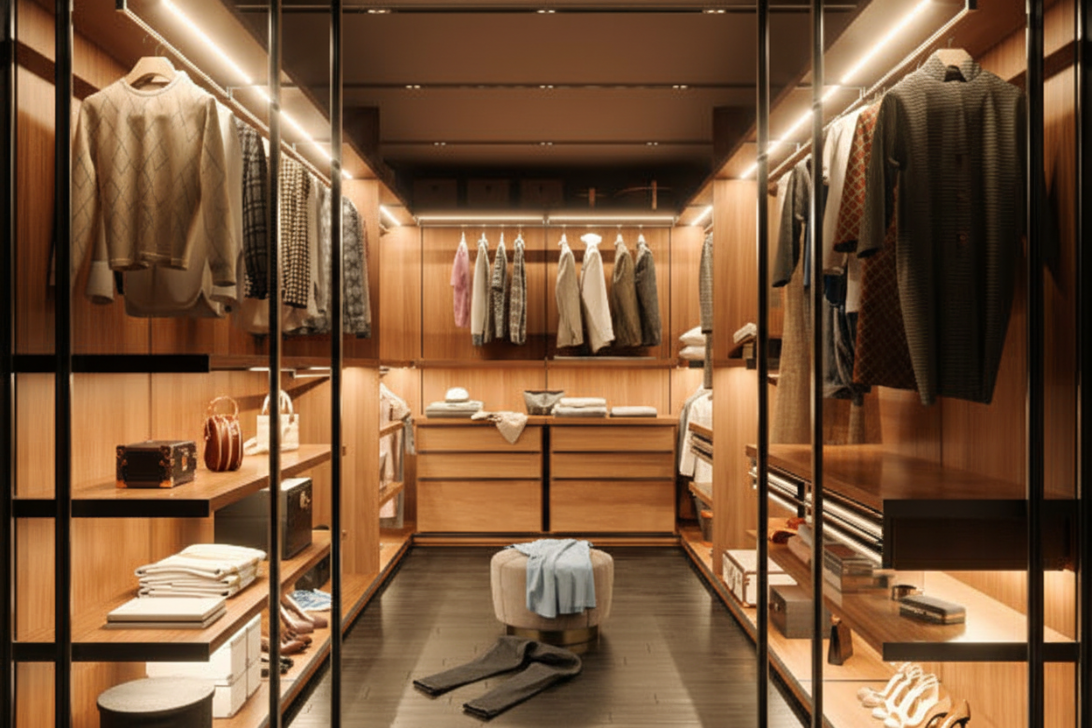
You don’t have “nothing to wear”, you have nothing you trust
When a returning professional says, “I have nothing to wear,” it is rarely literal. It usually means: I don’t trust what I’m seeing.
This is what happens when your role changes faster than your signals. After parental leave, redundancy, promotion, caregiving, or a return to high visibility, your wardrobe can lag behind your reality. The result is friction, hesitation, and a quiet sense of exposure.
If you want the research language for this shift, Herminia Ibarra describes identity transitions as a liminal period where professionals test “possible selves” before a new self feels stable.
Start with INSEAD’s working paper, Identity Transitions: Possible Selves, Liminality and the Dynamics of Career Change.
Each “maybe” item also forces a micro-negotiation. Stack those negotiations across a week of mornings and you get decision fatigue before work begins. Harvard Business Review has made the broader point that cognitive fatigue degrades judgement later in the day, which is why you want fewer decisions, earlier.
See Don’t Make Important Decisions Late in the Day.
Modern shopping systems amplify the problem. When options feel infinite, uncertainty often grows, not shrinks. This is not a hot take. It is consistent with choice-overload research, including the classic “jam study” by Sheena Iyengar and Mark R. Lepper, When Choice Is Demotivating, and later synthesis work such as Alexander Chernev’s Choice Overload meta-analysis.
Vestur’s position is direct: decision support reduces choice without reducing satisfaction because it replaces browsing with selection.
1) Signal drift: why your taste outgrew your closet
Your taste did not become “picky”. Your context became higher stakes.
When the clothes in front of you were chosen for an older chapter, they create signal drift. They might still be fine garments, but they are no longer reliable messengers of who you are now and what you can hold. That mismatch is why you hesitate.
The aim of this reset is closure without spending.
2) The zero-based audit: keep what you would choose today
Treat your wardrobe like a fresh delivery. Do not start by asking what to get rid of. Start by asking what you would actively choose, right now.
The 45-minute zero-based audit
- Pull 12 pieces you would happily wear to work this month. Put them on the bed.
- Pull 12 pieces that create hesitation. Put them somewhere separate.
- Label the hesitation with one reason only: fit, fabric, formality, colour, or feels dated.
- Create two piles:
- Resolved: obvious, current, low-friction
- Paused: requires negotiation
- Remove the paused pile from sight for two weeks.
This is not minimalism. It is noise reduction. With context in place, exclusion becomes logical.
For macro context on why uncertainty forces sharper decision-making in fashion and retail, use the annual State of Fashion reporting by McKinsey & Company and The Business of Fashion: The State of Fashion 2024 hub and BoF’s companion overview, The State of Fashion 2024: Riding Out the Storm.
3) Architecture over items: rebuild outfits as outcomes
Most wardrobes fail because they are stored as items, not outcomes.
Stop asking “What should I wear?” and start asking “What does today require?”
Use this three-part logic:
- Set the context: visibility, movement, formality, time pressure.
- Choose the structure: one stable base, one sharpening layer, one dependable shoe.
- Remove the variable: change one element only, not the entire outfit.
This is how you prevent morning negotiations. You define the day first, then you select within constraints.
4) Strategic augmentation: the missing 5% that unlocks the other 95%
Sometimes your wardrobe is not wrong. It is incomplete.
Strategic augmentation means one or two surgical purchases that unlock what you already own.
The missing 5% test
- You own five or more items you love but never wear.
- They all fail for the same reason.
- One purchase would make at least 10 outfits immediately viable.
That is not browsing. That is completion.
If you do need to buy, use a retailer like THE ICONIC as inventory access, not entertainment: THE ICONIC Australia. Vestur is designed to be used before browsing begins, so clicking “buy” feels settled, not rushed.
The step that makes this stick
If your wardrobe is making you hesitate, you do not need a new aesthetic. You need a stopping rule.
Do the audit, build three repeatable outfit structures, then buy only if the missing 5% unlocks at least ten outcomes.



